 Creative Expert Hub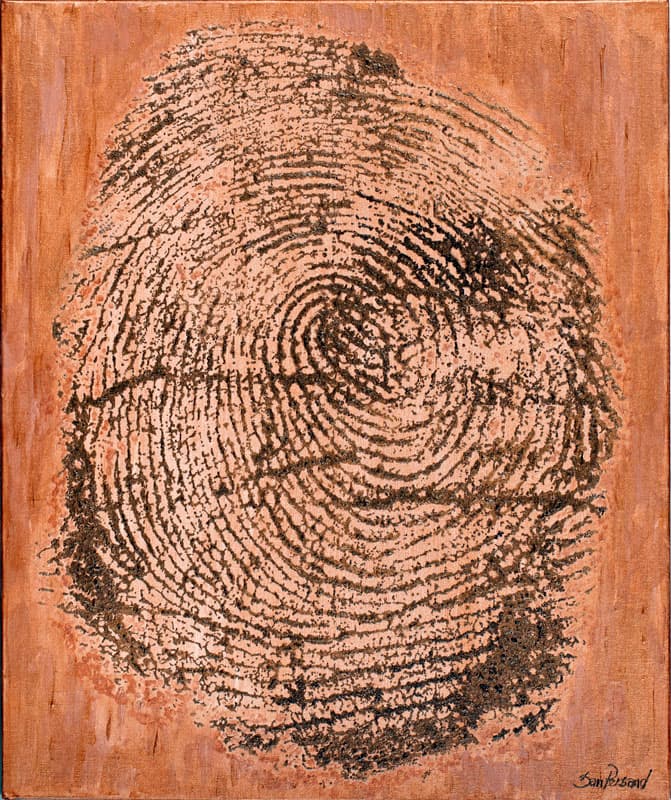
Auto-Portrait
Identity in Fingerprints
About the Piece
A self-portrait (auto-portrait in French) is the portrait of an artist as they see themselves. The face is a very distinct part of the human body that reflects and communicates most emotions. It also represents a personal identity that distinguishes one person from another.
In the legal world, criminals are not identified by their faces, but their fingerprints. Eye witness identifications of suspects can be wrong, but not fingerprints. Evidence from fingerprints play a key role in elucidating crimes by matching identity. In court, fingerprints can convict a suspect of committing a crime or clear them of suspicion.
The patterns of ridges on your finger pads are unique: no two individuals, even identical twins, have fingerprints that are exactly the same. The uniqueness of these patterns make fingerprints a reliable means of identification. Though DNA profiling can be more accurate, fingerprints are still the norm because they are inexpensive, fast and can be compared to a more extensive database. Fingerprints are immutable: they never change throughout an individual's lifetime. They even remain intact for some time after death, which makes them an effective way of identifying the deceased.
The legal world has always portrayed individuals through their fingerprints, and not through their faces. For this reason, my self-portrait in the legal world is a portrait of my fingerprint instead of my face. A painting of my fingerprint produces a more exact legal portrait of myself than an interpretive painting of my face. These ridges have been artistically painted on this canvas to represent the uniqueness in each of us. Painting each of these lines produces an extraordinary feeling of laying down my personality on canvas millimeter by millimeter.
Curious how creative thinking applies to your own work?